Since the beginning of humanity’s atomic age and the first detonation of a nuclear bomb, UFOs have consistently been observed around some of the world’s most sensitive nuclear sites. In fact, it appears that since the Trinity test, the first nuclear explosion, there has been a significant increase in UFO sightings, starting with the well-known Roswell incident. High-ranking Air Force officials have reported that these unidentified craft have grown so bold as to demonstrate their ability to deactivate and neutralize missile sites not only in the United States, but also in the UK, France, and Russia. While this information is familiar to long-time UFO enthusiasts, it has caught many newcomers to the phenomenon by surprise, especially in light of recent mainstream news coverage.


Conversations are flourishing across social media about the numerous reasons why UFOs seem particularly interested in nuclear sites. Some theorize that these “nonhuman intelligences” are deeply concerned about the environmental impact resulting from our limited understanding of nuclear technology. Incidents like Three Mile Island, Chernobyl, and Fukushima have highlighted humanity’s ongoing struggle to fully master the safety and environmental protections necessary to handle such immense, concentrated power. Alternatively, it’s possible that the UFOs themselves are utilizing radioactive materials for their own purposes, whether by gathering resources from man-made facilities, naturally occurring isotopes, or even from the radioactive waste produced by our own disasters.

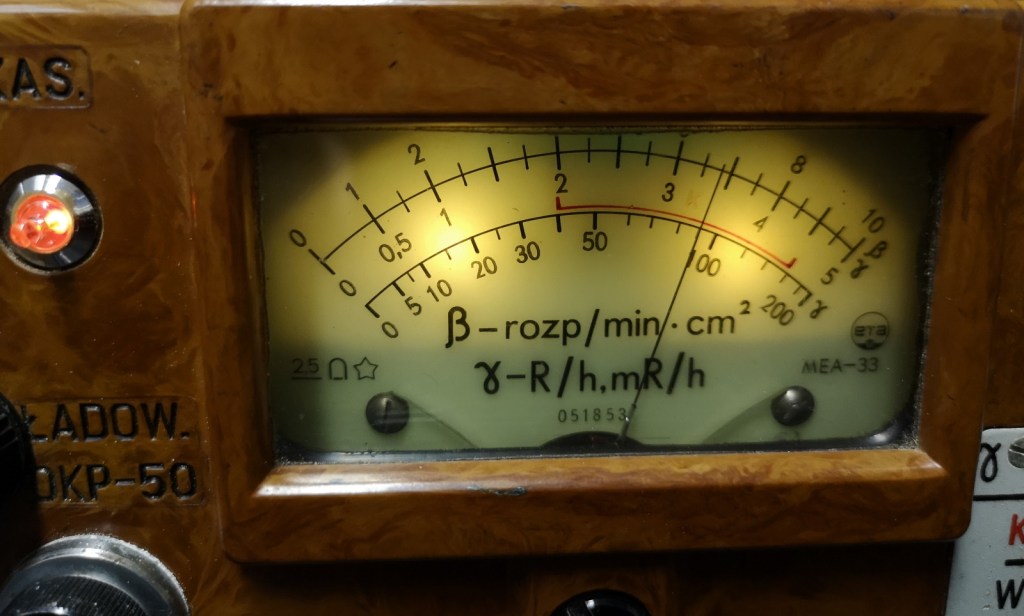
Reflecting on Project Blue Book, there were numerous UFO sightings that were directly linked to elevated levels of atomic radiation. In late summer of 1950, a group of scientists conducted an experiment in a mountainous region where UFOs were frequently observed. These sightings described blue-white spherical objects, sometimes appearing individually and at other times in groups of three, flying in a triangular formation. To investigate, the scientists placed Geiger tubes inside an abandoned building at the mountain’s peak in a pattern designed to detect any abnormal radioactivity. The equipment operated continuously, with the instruments being checked every few days.
In early December, around ten o’clock in the morning, reports emerged of a silvery, circular-shaped object seen near the instrument shack. Multiple witnesses observed the UFO. Upon checking the instruments, they discovered that several Geiger tubes had been triggered at precisely 10:17 A.M. The recorded radiation levels were about 100 times higher than the normal background radiation. This raises the question: could some form of radioactivity be a byproduct of UFO propulsion?

Now, let’s fast forward to today. The USS Nimitz “Tic Tac” encounter has drawn significant attention to Santa Catalina Island, highlighting that the waters surrounding this area have been a UFO hotspot for over a century. In Season 3, Episode 7 of Expedition X, Luis Elizondo joined the team for a dive off the northern part of Catalina Island, where they detected a large electromagnetic anomaly. Elizondo mentioned that he had received reports suggesting a connection between UAP activity and these magnetic anomalies. The area of interest is depicted in blue in the spectrographic image below.


When they dove down, they were unable to detect the anomaly until they approached a deep rift in the ocean floor, where the radioactivity was emanating from. At a depth of about 100 feet, and with oxygen levels running low, they were unable to explore further. Luis Elizondo took a water sample from above the rift before they ascended back to the surface. Almost as an afterthought, at the very end of the show, they revealed that the test results from that water sample indicated a high concentration of a cesium isotope. Although they did not specify which isotope, they mentioned that this cesium isotope has been linked to other UFO landing sites around the world. This intriguing detail is what led me to delve deeper into this topic.


It has been a bit difficult to find UFO cases that specifically mention Cesium or its isotopes. Radioactivity yes, but not elementally specific. Here is one that I did find:
On 17 September 1989, there was an alleged UFO landing in Russia that became known as The Voronezh UFO Incident.
“A group of children had spotted a small ball in the park whilst playing (now Yuzhny Park), which quickly morphed into a disc, which landed near them. Witnesses then reported a “three-eyed alien” and a robot exiting the craft. The alien stared at a horrified onlooker, freezing them in their tracks, before departing and returning five minutes later to abduct a 16-year-old boy, using what was described as a 50 cm-long “pistol tube”.
Though the children were the only ones claiming to have witnessed the aliens, Lieutenant Sergei A. Matveyev of the Voronezh district police station claimed to have seen the craft. The Interior Ministry said they would dispatch troops to the area should the craft reappear.”
The Soviet Scientific Commission ordered an official inquiry into the alleged incident. The area was found to have an above-average presence of a radioactive isotope of cesium.


Isotopes and Cesium: Understanding Their Significance
An isotope is defined as one of two or more forms of the same element that contain equal numbers of protons but different numbers of neutrons in their nuclei. This difference in neutron number causes isotopes to vary in relative atomic mass but not in their chemical properties. Often, isotopes are associated with the radioactive forms of elements.
Cesium, with an atomic number of 55, stands out as the most electropositive and most alkaline element. It reacts explosively with cold water and even reacts with ice at temperatures above -116°C. While cesium is less abundant than other alkali metals on Earth, it is still more plentiful than elements like iodine and uranium.
There are 39 known isotopes of cesium, but only two of them are stable, and of these, only one occurs naturally: Cesium-133. This naturally occurring isotope was first used to accurately measure time, defining the second and thus ensuring the precision of the atomic clock. Some of its other important uses include:
- Providing precise measurements in advanced GPS systems.
- Serving as an accurate time reference for detecting variations in pulsars.
- Facilitating experiments that test the principles of General Relativity with high accuracy.
The other stable isotope, Cesium-137, is radioactive and does not occur naturally. It is produced exclusively through the process of nuclear fission, primarily as a by-product of Uranium-235 fission in nuclear reactors and nuclear bombs. Despite its origins, Cesium-137 has several important modern applications:
- Industrial instrumentation for moisture detection and soil density testing.
- Used as a radiation treatment for certain types of cancers.
- Calibration of radioactivity detection equipment.
- It has been used as an energy source in certain ion propulsion engines in satellites.
- As a component in the fuel for the SR71 Blackbird, a high-speed reconnaissance aircraft craft.
In a recent interview with Luis Elizondo, Vinnie Adams of The Disclosure Team specifically inquired about the cesium isotope sample found off Catalina Island. Mr. Elizondo confirmed that there are indeed collected exotic meta-materials that contain unusually high amounts of cesium and other intriguing isotopes as part of their composition. However, he was unable to provide further details on the matter.

Now, we find ourselves with more questions than answers. What is the true nature of UAPs’ interest in Cesium and its isotopes? Are they merely concerned with the environmental impact of our nuclear disasters, or could they be actively utilizing pockets of Cesium-137 fallout for their own technological sustainability and advancement? Is it possible that they are conducting their own fission processes in deep bodies of water here on Earth?
 The Jolt
Leave a comment